

Connext
Per seat and published. The same whether chart volume rises or falls.Certified coders hired against your specialty mix, working your queues inside your systems, under your QA thresholds.
Quick answer
Medical coding is the step where clinical documentation becomes a billable claim: someone reads the record and assigns the diagnosis and procedure codes the payer is charged against. At Connext, coders do that work inside your EHR and your queues, against your specialty mix and your payer rules, and to the accuracy threshold your compliance team sets.
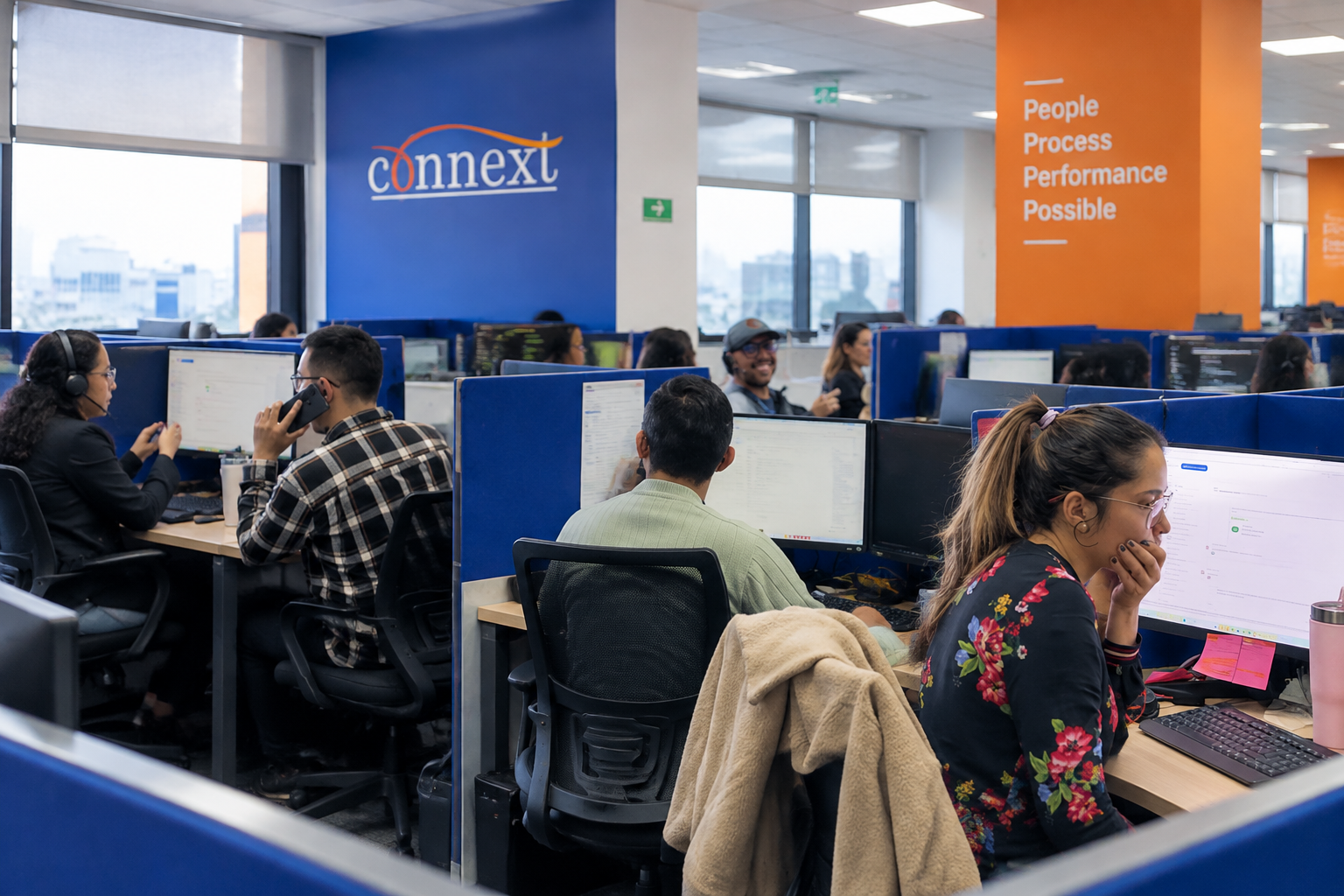
A medical coding team turns what the clinician wrote into the codes the payer will accept.
The team reads the documentation for each encounter, assigns the diagnosis and procedure codes, enters the charges, queries the provider when the note does not support the code, and reviews any claim denied on coding grounds. The margin for error runs both ways: code too low and the claim is underpaid, code too high and it becomes a compliance problem.
Connext Coding Teams are certified coders who do this work all day. They work inside your encoder and your work queues, under your coding policy.
TASK 01
Assigns the diagnosis and procedure codes from the clinical documentation, against your specialty mix and your payer requirements.

TASK 02
Enters the charges and reconciles them against the encounter, so what was documented is what gets billed.

TASK 03
Samples completed work, logs the errors and feeds the corrections back on the cadence your compliance team sets.

TASK 04
Works the denials that come back as coding issues and reports the pattern, so the same one stops repeating.

TASK 05
Raises a query to the provider when the record does not support the code, instead of guessing at intent.
When coding keeps up, nobody notices it. When it does not, the backlog moves the denial rate before it ever looks like a revenue problem.
Coding sits at the point where clinical documentation becomes revenue, so a vacancy does not just slow a queue: it moves the denial rate. Most organizations find out that their coding backlog is a hiring problem long before it looks like a revenue problem.
63%
Of providers report shortages in billing, coding and documentation roles
$29,500
Average annual difference per coder: about $59,500 in the U.S. against roughly $30,000 offshore
8%
Projected growth for medical records specialists through the mid-2030s (U.S. Bureau of Labor Statistics)
21
Average days for Connext to fill a position
The difference shows up the first time something goes wrong.
In a conventional outsourcing contract, the vendor runs the coding function largely on its own terms and reports results back in aggregate. You see an outcome, not a process. In a staffing model, your organization still sets the standards, the QA thresholds and the escalation path: the coders are dedicated to you, work your queues, and your compliance team can audit them like any other part of the operation. That distinction is what makes coding safe to move offshore at all.
You are. The codes submitted under your NPI are your responsibility. An offshore team works to your policy; it does not take on your liability.
You do. You define the accuracy targets, the query rules and what gets escalated rather than coded.
Your compliance function. Internal and external audits stay with them, and Connext supplies the error tracking and sampling that feed them.
Your people, through the channel you approve. Documentation queries route that way, so clinicians are not fielding requests from an unfamiliar team.

See how a behavioral health billing company scaled from 37 to 66 facilities with strong reimbursement, compliance, and quality performance.
Find out more

Build offshore teams for order processing, invoicing, picking tickets, and accounting support. Scale your food distribution business faster.
Find out more
See how a U.S. IT company replaced a costly contractor with a structured offshore service desk — starting with just two hires. Download the case study.
Find out more